
At IRIES, our mission is to help ethical companies communicate innovations through visualization, storytelling, and strategic communication, and improve people’s lives.
Many innovations have the power to improve people’s lives, strengthen communities, and transform industries. Yet a surprising number of them struggle to reach their full potential. The reason is rarely technical. In many cases, the challenge lies in communication.
When innovation cannot be clearly understood, it becomes difficult to support. Investors hesitate because the value is unclear. Partners struggle to see how the technology fits into existing systems. Customers delay decisions because the benefits are not immediately visible. In these moments, communication becomes as critical as engineering. The ability to clearly present a technology often determines not only how quickly it reaches the market, but also whether it attracts the capital and strategic support required to grow.
Through visualization, storytelling, and strategic communication, we help organizations present complex technologies in ways that are clear, compelling, and measurable in their impact.
Technology plays a crucial role in the everyday lives of millions of people. When it is implemented well, it can transform how communities function, how cities move, and how people access essential services.
One example is public transportation.
Transportation is one of the most visible examples.
Public transit systems form the backbone of mobility for millions of people across North America. For those who do not have access to a personal vehicle, reliable transit is not simply a convenience. It is essential infrastructure that connects people to employment, education, healthcare, and opportunity.
Behind every functioning transit system are companies that design, maintain, and deploy the vehicles and technologies that make mobility possible.
Organizations such as Damera Corporation play a critical role in this ecosystem. Through vehicle refurbishment, maintenance services, and the introduction of advanced transit vehicles to the North American market, they support the infrastructure that enables communities to move.
But introducing new transportation technologies—or any advanced product—to the market requires more than engineering excellence.
It requires the ability to communicate innovation clearly.
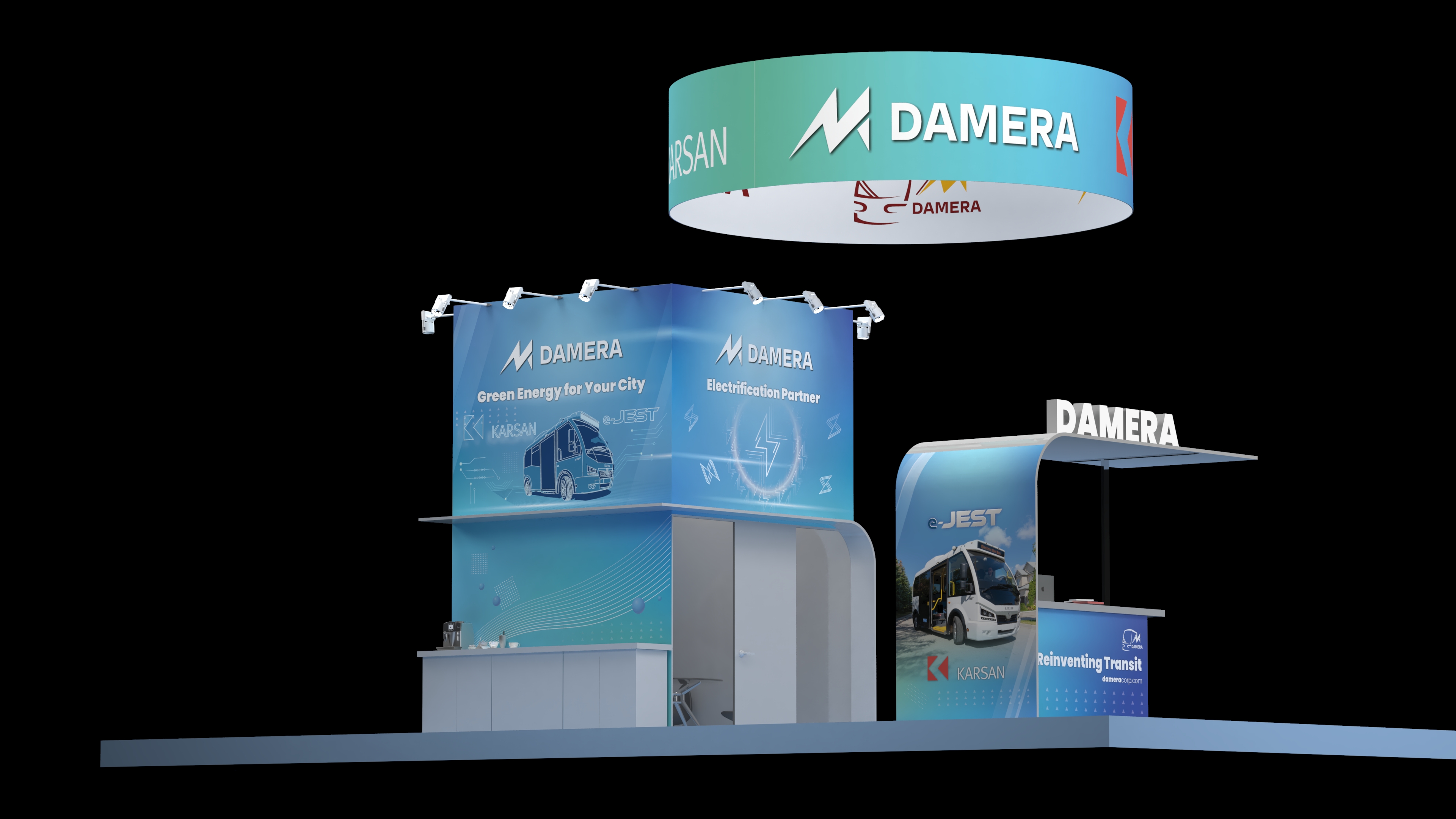
Delivering new technology to the market requires three essential elements:
precision engineering, strong collaboration, and strategic visibility.
- Engineering creates the product.
- Collaboration brings together the expertise required to build it.
- Visibility allows the market to understand it.
Without visibility, even the most advanced innovations struggle to gain traction.
When a new product enters the market, the primary challenge is rarely only technical. Engineering teams solve complex problems behind the scenes, but the next step is helping others understand what has been created and why it matters.
Different stakeholders require different forms of understanding.
- Investors want to see long-term potential.
- Customers want to understand how the product improves their operations or daily life.
- Sales teams need clear tools that help them communicate value quickly and convincingly.
However, visualization alone does not create understanding.
A strong technology presentation is built on the integration of several elements:
visuals, narrative, structure, and context.
- Images reveal form and function.
- Animations demonstrate processes and interactions.
- Videos place technologies in real-world environments.
- Words provide meaning and explanation.
When these elements are carefully aligned, they allow audiences to move from curiosity to comprehension.
At IRIES, our role is to make all the ellements aligned. We build communication frameworks that help organizations explain their innovation with clarity and confidence.
At IRIES, we view visualization not as a decorative layer added at the end of development, but as part of the innovation process itself.
A product does not exist only as a physical object engineered in a workshop or laboratory. It also exists as a story that must be communicated to the world.
If that story is unclear, the innovation remains invisible.
This is why our work often begins early—sometimes when a technology is still at the prototype stage.
During this phase, companies must already explain their ideas to investors, partners, regulators, and early adopters. At the same time, the product itself may still be evolving.
Visualization provides the bridge between these two realities.
Through 3D product visualization, animation, and structured presentation design, technical concepts can be transformed into clear visual explanations that allow audiences to understand both the mechanism and the potential of a technology.
Instead of waiting until a product is fully deployed, companies can communicate its value while it is still being developed.
One of the most common mistakes companies make when presenting new technology is producing communication materials in isolation.
A marketing video is created separately from the investor presentation.
Trade show graphics are developed independently from website content.
Technical diagrams remain disconnected from the broader narrative.
The result is fragmentation.
Audiences receive multiple pieces of information that do not form a coherent picture of the innovation.
Our approach at IRIES is different.
We think about communication as a system that must function across the entire ecosystem of a business.
This includes:
When these elements share a consistent visual language and narrative structure, companies gain several advantages.
They communicate their innovation more clearly.
They reduce the need to recreate materials repeatedly.
And they build a stronger, more recognizable identity in the market.
Clear visual communication helps decision-makers understand complex technologies more quickly. It enables sales teams to explain products more effectively. It allows companies to demonstrate value before full deployment.
Perhaps most importantly, it ensures that innovations designed to improve systems—whether in mobility, infrastructure, or industry—are understood by the people who have the power to implement them.
Delivering new technology to the market requires precision engineering, strong collaboration, and strategic visibility. Innovation must be communicated in ways that support sales teams, help customers understand its real-world value, and clearly position the company behind it.
When a new product enters the market, the challenge is rarely only technical. Engineering teams solve complex problems, but the next step is helping others understand what has been created and why it matters.
- Investors want to see the potential.
- Customers want to understand how the product will improve their operations or daily life.
- Sales teams need clear tools that allow them to explain the value quickly and convincingly.
This is where visualization becomes essential.
At IRIES, we believe that visual communication is part of the innovation process itself.
A product does not exist only as an engineered object—it also exists as a story that needs to be clearly communicated to the world.
That is why our work often begins early, sometimes when a technology is still in the prototype stage. At that moment, companies already need to explain their ideas to investors, partners, and early customers. By developing 3D product visualizations, animations, and presentation materials, we help transform technical concepts into clear visual narratives.
But visualization alone is not enough.
A strong presentation combines visuals, words, structure, and context. Images explain form and function. Videos demonstrate how a system works. Well-written messages help audiences understand why the technology matters and what problem it solves.
Our role is to bring these elements together.
Instead of producing isolated materials, we think about how communication works across the entire ecosystem of a business—from investor presentations and trade show displays to websites, marketing materials, and digital platforms. When the same visual language and narrative structure are used consistently, companies save time, reduce costs, and communicate their innovations more effectively.
In this way, visualization becomes more than design. It becomes a tool that helps companies introduce new technologies to the market with clarity and confidence.
At IRIES, this belief guides how we work: building alongside our clients, understanding the technology behind their products, and creating visual communication that helps innovation reach the people who need it most.


Lorem ipsum dolor sit amet, consectetur adipiscing elit, sed do eiusmod tempor incididunt ut labore et dolore magna aliqua. Ut enim ad minim veniam, quis nostrud exercitation ullamco laboris nisi ut aliquip ex ea commodo consequat. Duis aute irure dolor in reprehenderit in voluptate velit esse cillum dolore eu fugiat nulla pariatur.
Block quote
Ordered list
Unordered list
Bold text
Emphasis
Superscript
Subscript


.jpg)


